



 ANTM2
ANTM2 ANTM1
ANTM1 ANL7
ANL7 ANXS3
ANXS3 ANXS
ANXS ANSH201
-.jpg) ANNC100H
ANNC100H ANMY
ANMY ANMC
ANMC ANMEC-D
 ANL7N
ANL7N-.jpg) ANIC60N
ANIC60N ANDX-S
 ANDX-D
 ANDX3
ANDX3 ANC60
ANC60.jpg) ANC45
ANC45 ANBKN
ANBKN ANS201
 ANNT50LED
-.jpg) ANNT50
ANNT50 ANLM6
ANLM6 ANLM5
ANLM5 ANLM4
ANLM4 ANLM3
ANLM3 ANLM2
ANLM2 ANLM1
ANLM1-.jpg) ANM11(NF-CS)
ANM11(NF-CS)-.jpg) ANM13(VL)
ANM13(VL)-(2)-.jpg) ANM10(NF-CW)
ANM10(NF-CW)-(2)-.jpg) ANM9(NSX)
ANM9(NSX)-.jpg) ANM8(S)
ANM8(S)-(1)-.jpg) ANM7(Tmax)
ANM7(Tmax)-(1)-.jpg) ANM6(ABS,ABE)-(1)
ANM6(ABS,ABE)-(1)-.jpg) ANM5(DPX3)
ANM5(DPX3)-(5)-.jpg) ANM4(DPX)
ANM4(DPX) ANM1N
ANM1N-.jpg) ANM1
ANM1 ANF360N
 ANIDN
ANIDN ANNFIN
 ANID
ANID ANF360
 ANF7N
ANF7N ANF7
ANF7副本xiao.jpg) ANINT
ANINT.jpg) ANDHMI
ANDHMI ANQ3-G
 ANT1-R
 ANT1-C8
 ANT1-5
 ANT4
ANT4 ANT1-1~3
 ANT1-B
 ANT1-C ARC
 ANT1-C
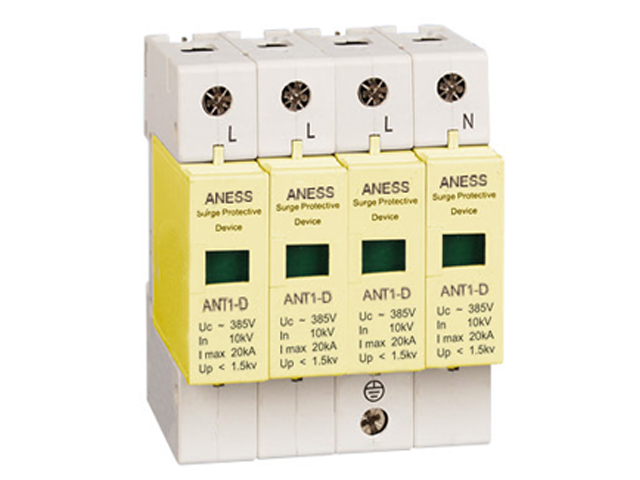 ANT1-D
 ANTI-A50
  ANMC
ANMC ANLS
ANLS ANLC1
ANLC1 ANNLC1
 ANLC2
ANLC2 ANAB TYPE
 AN3TF
AN3TF ANSA-1
 ANSA-2
 ANSA-3
 CSK4-YKW
 AN3-125
 AN818
AN818 AN9600-3EY
 AN9601-3E
 AN7201-3E
 AN7200-3EY
 AN72-3EY
 AN96-3E
 AN80-3AV
 AN96-AIY
 AN96-AI
 AN72-AV
 AN48-3AI
 AN80-3AI
 AN42-3AV

Company Profile
Products List
.jpg)
-.jpg)
News You are here: Home > News > What is the difference between a DC breaker and an AC breaker ?
You are here: Home > News > What is the difference between a DC breaker and an AC breaker ?
What is the difference between a DC breaker and an AC breaker ?
Date: 2019-05-03 Click: 1920
Basic understanding of DC circuit breakers: Refers to circuit breakers used for DC shunt operation method conversion or fault removal. It can be used in industries such as electric power, post and telecommunications, transportation, industrial and mining enterprises, etc. for the equipment and electrical stop overload and short circuit maintenance of DC power distribution.
The operating principle of the DC circuit breaker: The main circuit of the DC circuit breaker includes a lower connection row supporting the movable contact, an upper connection row and a silver-plated contact on the outside, and a large can-shaped magnet with a closing coil is mounted on the closing Composition. The magnet contains a moving core, a contact pressure spring and a core return spring; all of these components are mounted on the operating rod. The fork unit is attached to the top of the lever. The overcurrent trip installation includes an armature consisting of laminated sheets, a moving core attached to a lever that is held by a spring, because the effect of the rod can set the trip setting. The five pairs of auxiliary contacts are the reversing contacts mastered by the moving contacts. They are located in the plastic box at the bottom of the closing installation. The arc extinguishing chamber comprises gussets, partitions and deionization plates, all of which are arranged between the two arc extinguishing plates. When the circuit breaker is opened due to overcurrent or normal opening and closing, the pushing mechanism will drive the moving contact to open. The pushing mechanism is different from the five commutating auxiliary contacts.
Two major categories of DC circuit breakers:
1. Two-stage DC circuit breaker. The two-stage DC circuit breaker has 8 to 10 times of the extra current of the lower-level switch and 4 to 5 steps of the differential operation. The accurate measures are superior to the joint venture.
2. Three-section DC circuit breaker. Three-stage DC circuit breaker, the lower stage is three-stage, the lower stage is two-stage or three-stage DC circuit breaker, the step difference is 2, and the short-circuit current is 25 to 40 times of the extra current of the lower-level circuit breaker. .
The main difference between DC circuit breaker and AC circuit breaker: the difference between the two is to eliminate arcing. Since the exchange has a zero crossing every cycle, the arc is easily extinguished at the zero crossing, and the DC switch has no zero crossing, and the arc extinguishing ability is very poor, so an additional arc extinguishing installation is added. In general, it is a DC hard-extinguishing arc, and the exchange has zero crossings, and arc extinguishing is easy.
The operating principle of the DC circuit breaker: The main circuit of the DC circuit breaker includes a lower connection row supporting the movable contact, an upper connection row and a silver-plated contact on the outside, and a large can-shaped magnet with a closing coil is mounted on the closing Composition. The magnet contains a moving core, a contact pressure spring and a core return spring; all of these components are mounted on the operating rod. The fork unit is attached to the top of the lever. The overcurrent trip installation includes an armature consisting of laminated sheets, a moving core attached to a lever that is held by a spring, because the effect of the rod can set the trip setting. The five pairs of auxiliary contacts are the reversing contacts mastered by the moving contacts. They are located in the plastic box at the bottom of the closing installation. The arc extinguishing chamber comprises gussets, partitions and deionization plates, all of which are arranged between the two arc extinguishing plates. When the circuit breaker is opened due to overcurrent or normal opening and closing, the pushing mechanism will drive the moving contact to open. The pushing mechanism is different from the five commutating auxiliary contacts.
Two major categories of DC circuit breakers:
1. Two-stage DC circuit breaker. The two-stage DC circuit breaker has 8 to 10 times of the extra current of the lower-level switch and 4 to 5 steps of the differential operation. The accurate measures are superior to the joint venture.
2. Three-section DC circuit breaker. Three-stage DC circuit breaker, the lower stage is three-stage, the lower stage is two-stage or three-stage DC circuit breaker, the step difference is 2, and the short-circuit current is 25 to 40 times of the extra current of the lower-level circuit breaker. .
The main difference between DC circuit breaker and AC circuit breaker: the difference between the two is to eliminate arcing. Since the exchange has a zero crossing every cycle, the arc is easily extinguished at the zero crossing, and the DC switch has no zero crossing, and the arc extinguishing ability is very poor, so an additional arc extinguishing installation is added. In general, it is a DC hard-extinguishing arc, and the exchange has zero crossings, and arc extinguishing is easy.


